Step into culture, creativity, and community this 21st March at the Kenya Museum Pop-Up Market.

Discover a curated selection of locally made products, heritage-inspired creations, and innovative works that celebrate Kenya’s rich cultural identity. From unique crafts to natural products, the market brings together artisans, entrepreneurs, and creatives shaping the future of heritage-based industries.

Join us for a vibrant experience at the museum and support local talent!

Step into culture, creativity, and community this 21st March at the Kenya Museum Pop-Up Market.
Discover a curated selection of locally made products, heritage-inspired creations, and innovative works that celebrate Kenya’s rich cultural identity. From unique crafts to natural products, the market brings together artisans, entrepreneurs, and creatives shaping the future of heritage-based industries.
Join us for a vibrant experience at the museum and support local talent!

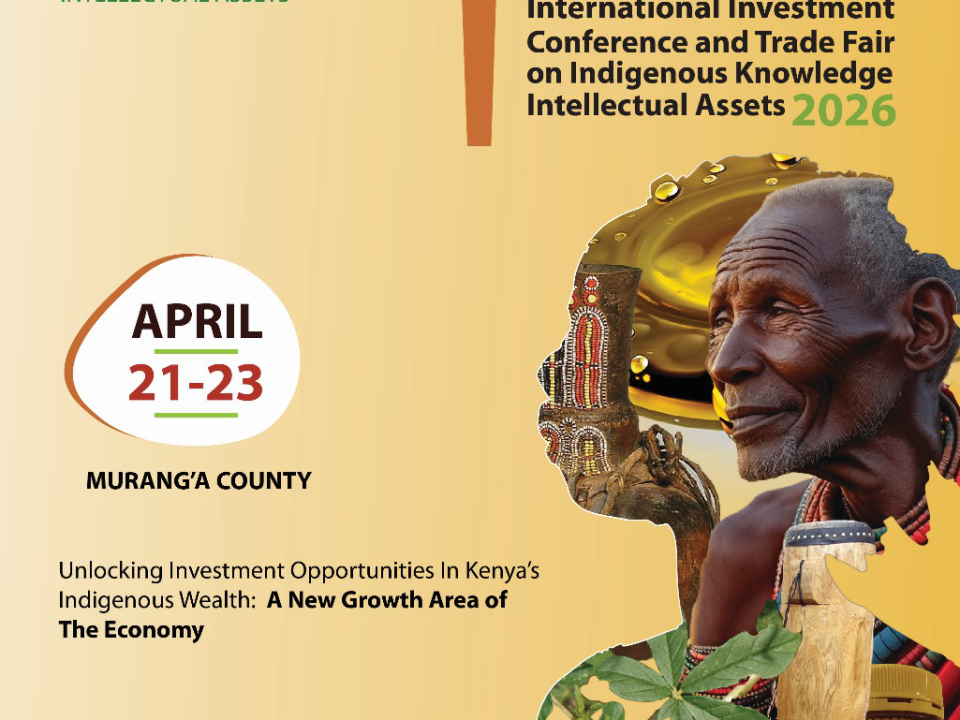
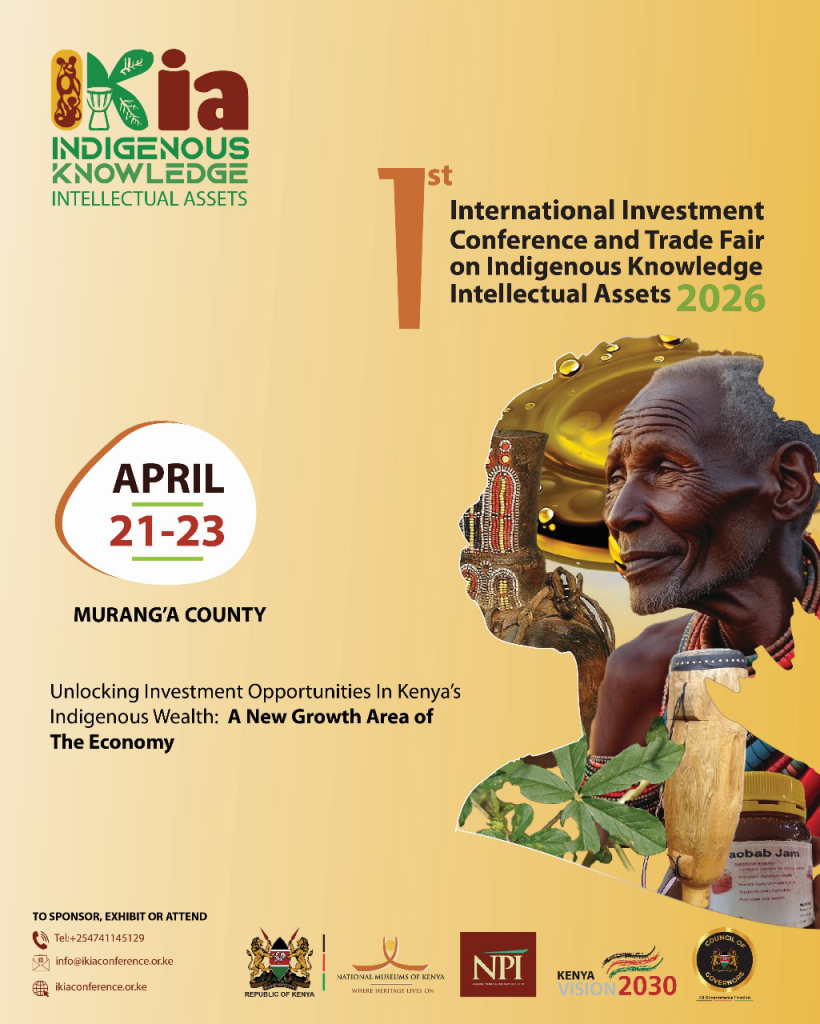
Join us for the 1st International Investment Conference and Trade Fair on Indigenous Knowledge Intellectual Assets 2026!
This first-of-its-kind event shines the spotlight on Kenya’s rich Indigenous Knowledge as a new growth area for the economy. Discover market-ready innovations rooted in culture and tradition. Connect with asset owners, entrepreneurs, and investors as we chart the future of IK assets in the global marketplace. For more information, visit : https://ikiaconference.or.ke/


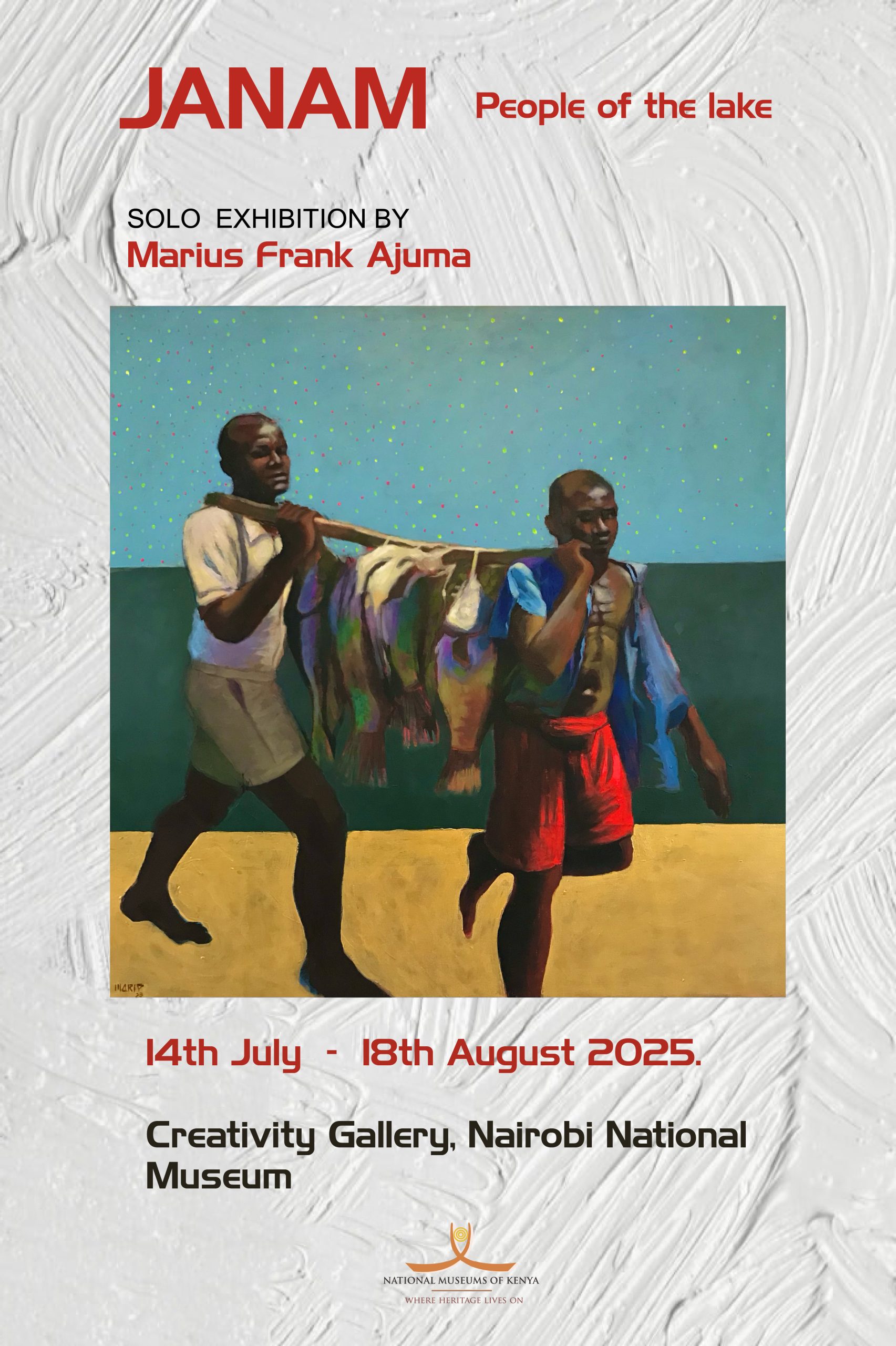
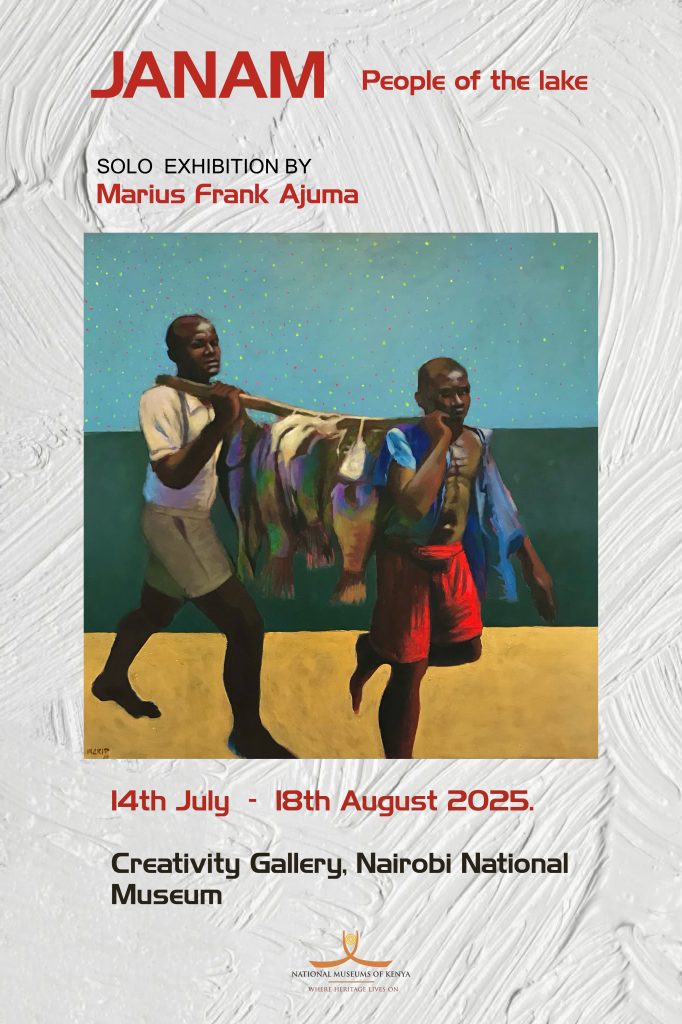
Bold. Colourful. Deeply rooted.

JANAM by Marius Frank Ajuma, 14 July – 18 August 2025, Creativity Gallery, Nairobi National Museum
Explore the daily life of the Luo people around Lake Victoria through Ajuma’s striking brushwork.


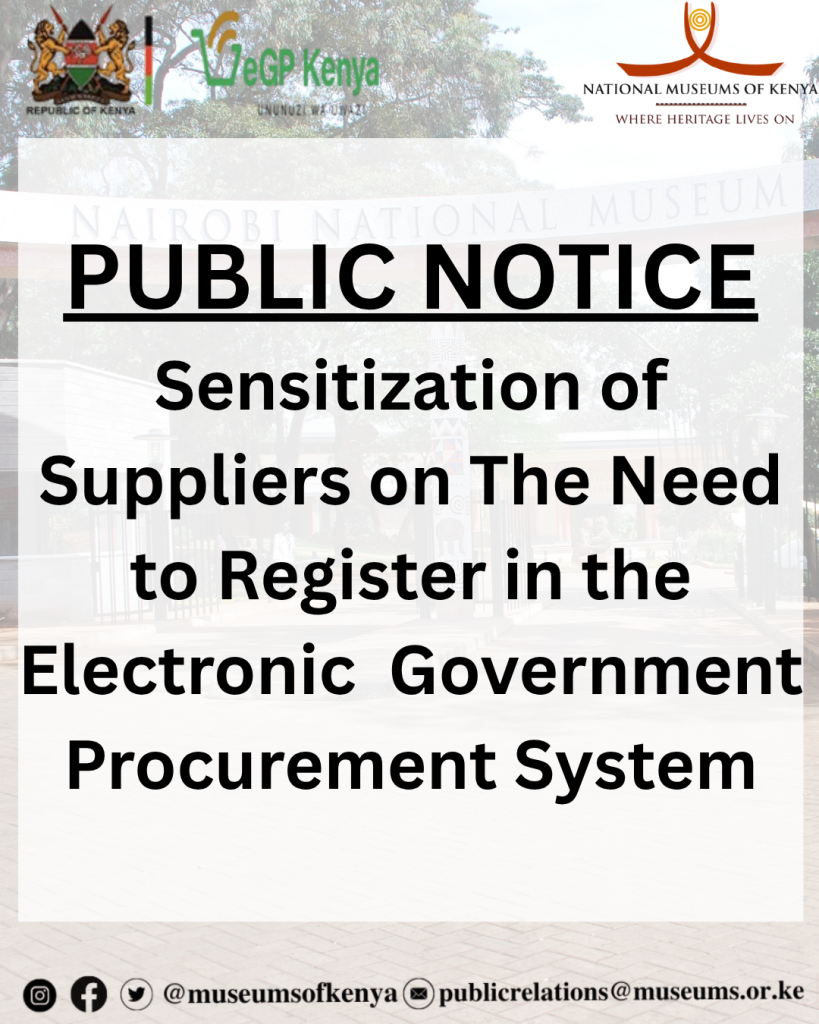
NOTICE TO SUPPLIERS/ CONTRACTORS/CONSULTANTS

Suppliers/Contractors/Consultants are required to self-register on the e-GP portal that is accessible through www.egpkenya.go.ke. In addition, they are requested to note the following:

  1. Suppliers/Contractors/Consultants may contact the support address indicated below in case of challenges faced during registration: Email address: support@egpkenya.go.ke Telephone: +254 (020) 3341030 / 3340400 / 3340433
  2. Suppliers/Contractors/Consultants within Nairobi may visit e-GP offices situated on 6th Floor, Room 622 Treasury Building, Harambee Avenue to receive registration assistance between 9.00am – 4.00pm;
  3. Suppliers/Contractors/Consultants may also visit The National Treasury desk in all Huduma Centres during the office working hours;
  4. Supplier Registration Module manual is available on the e-GP Portal; and
  5. The National Treasury will organize weekly supplier registration webinar every Thursday. Suppliers will be required to register for training through links provided on egpkenya.go.ke under Supplier Training. Only suppliers who have registered for training will be invited to the webinar.

By Lilian Mwenda

Cancer Palliative Garden: A Sanctuary of Hope and Healing

There is no compelling reason why you don’t have cancer. Why any of us doesn’t have cancer. No special reason why our children are not going for chemo. Because we aren’t the chosen ones. We aren’t pure in deed or heart. Our prayers don’t fall on any more special ears than those who have been visited by the ugliness of cancer. Yet, we wake up with bodies that give an impression of bastion health, and when we retire to bed, we forget that we are undeserving. That our bodies are merely water, flesh, and air.

These words, borrowed from Bikozulu’s recent story Eleven Lymph Nodes, perfectly encapsulate the fragility of life and the randomness of cancer’s grip. In his story, Biko writes about a woman—a marathon runner, health-conscious, and disciplined—she ate healthy, exercised, and ran 10-kilometer marathons for fun. The type of person who seemingly had her health locked down. And yet, cancer still found her. This is the cruel paradox of cancer. It does not discriminate. She was a mother, terrified of leaving her child behind, a reality that starkly contrasts the image of a vibrant, energetic woman who lived by the book of good health.

Cancer remains a major public health problem globally. According to the World Health Organization (WHO), it is predicted that more than 20 million new cases will occur worldwide by 2025, with 80% of the burden falling on low- and middle-income countries.
In Kenya, data from the National Cancer Registry at KEMRI reveals an alarming reality: the country reports over 47,000 new cancer cases and more than 32,000 cancer-related deaths annually. The most prevalent cancers include breast cancer in women and prostate cancer in men, and tragically, a significant portion of these cases are diagnosed at late stages due to limited access to screening and treatment facilities.

Despite cancer’s randomness, experts agree there are ways to reduce risk. Eating a healthy diet, avoiding smoking, exercising regularly, limiting alcohol consumption, and undergoing regular screenings can lower the chances of developing certain types of cancer. But even these measures are no guarantee, as Biko’s story reminds us.

Cancer is an ugly, relentless thief—it robs people of dreams, peace, and even dignity. The cost of treatment is another beast altogether, often pushing families into financial ruin. This is the backdrop against which many Kenyan families battle cancer.

And yet, amidst the despair, there is hope. The Cancer Palliative Garden, established by the National Museums of Kenya (NMK), represents a quiet revolution in the fight against cancer. Research on this initiative began in 2018, and after years of dedicated work, the garden was officially launched as part of NMK’s Botanic Garden. This space, adjacent to Michuki Park, showcases over 25 plant species reported to have nutraceutical properties. These plants aren’t just part of Kenya’s botanical heritage—they are lifelines for cancer patients seeking alternative or complementary treatments.

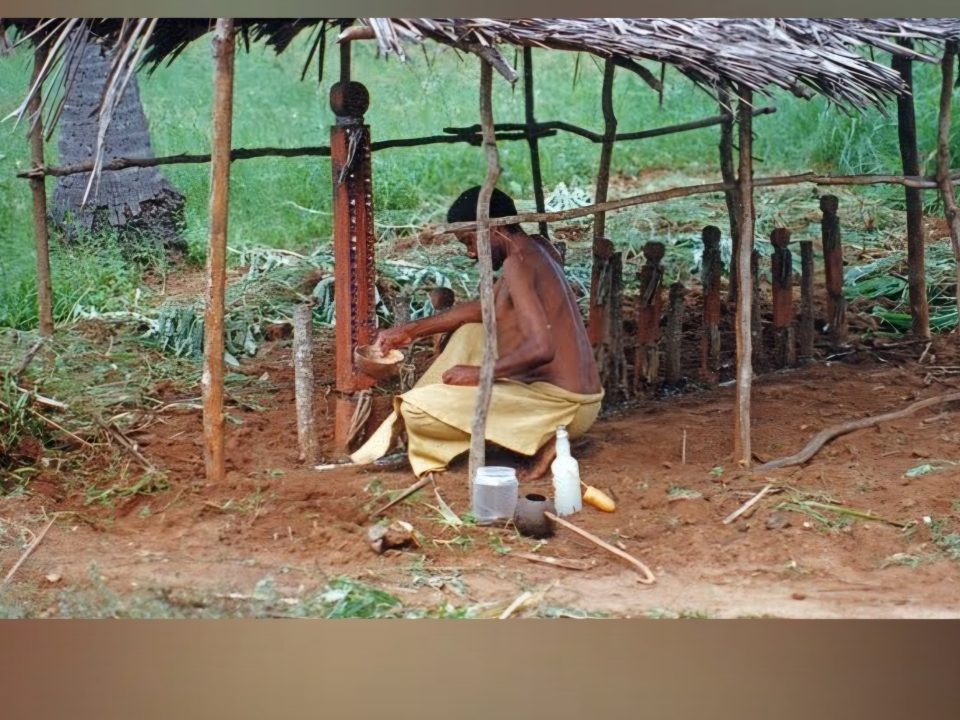
The garden’s creation was rooted in deep collaboration with Traditional Health Practitioners (THPs). During their multidisciplinary study, scientists from NMK, the University of Nairobi (UoN), Kenya Medical Research Institute (KEMRI), and the Ministry of Culture and Social Services, funded by the National Research Fund (NRF), worked closely with THPs to identify the plants being used to treat cancer patients. By documenting these indigenous treatments, the team was able to identify the 25 plant species featured in the garden. The plants are used in diverse ways: their barks, roots, or leaves are consumed in teas, ground into powders, or made into decoctions to treat patients. Among them are Combretum molle (Velvet Bushwillow)- which has been used for its antioxidant and anti-inflammatory properties, Prunus africana (African Cherry, nicknamed Red Stinkwood) whose bark has been linked to treatments for prostate cancer, and Zanthoxylum gilletii (East African Satinwood) valued for its medicinal oils and reported cancer-fighting properties.

Led by Dr. Solomon K. Cheboi (PhD), the study team included Dr. Kiprop Lagat (Culture), Peris Kariuki(PhD), Daisy N. Nyawira, Philamon Nyamanga, Peter M. Ngolo, and Wanjiru S. Ng’ang’a (all from NMK). The research sought to determine whether indigenous regimens could improve the quality and longevity of life for cancer patients. The study also documented patients’ treatment-seeking behaviors and explored the suitability of traditional medicine in complementing conventional treatments.

The findings were nothing short of remarkable. Of the 443 cancer patients studied, spanning seven different types of cancer, 76% reported significant improvement after using traditional medicines These regimens, derived from the garden’s 25 species, include plants with documented nutraceutical properties that can enhance patients’ quality of life.

Kariuki’s story brings these findings to life. In 2022, he experienced persistent nosebleeds at work, which led to a diagnosis of stage 2 throat cancer. Chemotherapy left him weak, unable to eat, and reliant on feeding tubes. “I thought I was going to die,” Kariuki recalls, describing nights filled with fear and hopelessness. Desperate for relief, his family turned to a Traditional Health Practitioner who prescribed a plant-based regimen, a form of treatment known as phytotherapy. Within months, Kariuki was back on his feet, eating and drinking as usual. By 2023, his scans came back clear—he was cancer-free.

This is just one of many testimonies validating the potential of traditional medicine. While the results are promising, the researchers emphasize the need for more funding and research to expand the understanding of these indigenous regimens and their role in cancer care.

The Cancer Palliative Garden represents more than just a collection of plants. It’s a sanctuary of hope, a space for research, conservation, and awareness. It showcases the potential of traditional medicine to complement modern treatments, giving patients an affordable, culturally rooted option.

As cancer continues to loom large, shattering lives and testing humanity’s resolve, initiatives like this garden remind us of the strength in community and the power of innovation rooted in heritage. For those battling cancer and their families, it stands as a quiet but powerful ally, offering a path not just to survival but to a better quality of life.


By Lilian Mwenda

Celebrating Kenya’s Eight UNESCO World Heritage Site

On July 27, 2024, Kenya achieved a historic milestone with the inscription of the Historic Town and Archaeological Site of Gedi as a UNESCO World Heritage Site. This landmark achievement brought immense pride not only to the National Museums of Kenya (NMK) but also to the nation at large. While the recognition of a site as a World Heritage Site may seem straightforward, the process is anything but simple. It involves rigorous preparation, dedication, and collaboration.

The Journey to UNESCO World Heritage Status

Becoming a UNESCO World Heritage Site involves a rigorous, multi-step process, guided by the Operational Guidelines for the Implementation of the World Heritage Convention. The process ensures that only sites of Outstanding Universal Value (OUV) are inscribed, and it includes:

  1. Tentative List Submission
    A country begins by preparing a Tentative List, which forecasts the significant cultural and natural heritage sites that may be nominated within the next five to ten years.
  2. Identification of Outstanding Universal Value (OUV)
    For Gedi, its OUV lies in its role as a Swahili settlement integral to the Indian Ocean trading network. Gedi exemplifies cultural exchanges between African, Islamic, and Indian Ocean traditions.
  3. Nomination Dossier Preparation
    A comprehensive nomination dossier is then prepared. This document provides detailed evidence of the site’s significance, authenticity, and conservation strategies. For Gedi, NMK’s dedicated team—including Hosea Wanderi (World Heritage Sites), Hussein Aden (Curator of Gedi), and Mohammed Menje (Curator of Lamu)—played a pivotal role in compiling the submission.
  4. Evaluation by Advisory Bodies
    The dossier undergoes a rigorous review by advisory organizations, including the International Council on Monuments and Sites (ICOMOS) and the International Union for Conservation of Nature (IUCN). These bodies evaluate the site’s OUV, protection measures, and management.
  5. World Heritage Committee Decision
    The final decision is made during the annual World Heritage Committee session, where Gedi’s inscription was unanimously approved based on its OUV and adherence to the nomination criteria.

Gedi’s Fulfillment of UNESCO Criteria

The Historic Town and Archaeological Site of Gedi met three specific UNESCO criteria:

Why World Heritage Status Matters

Gedi’s inscription as a UNESCO World Heritage Site is more than a badge of honor—it holds significant benefits for Kenya, including:

Kenya’s Eight World Heritage Sites

With Gedi’s inclusion, Kenya now boasts eight UNESCO World Heritage Sites with most under National Museums of Kenya.

  1. Gedi World Heritage site- A testament to Swahili architectural and cultural heritage.
  2. Lamu Old Town (Cultural): The oldest Swahili settlement in East Africa.
  3. Fort Jesus, Mombasa (Cultural): A 16th-century Portuguese fort.
  4. Thimlich Ohinga Archaeological Site (Cultural): Unique stone-walled settlements in the Lake Victoria basin.
  5. Sacred Mijikenda Kaya Forests (Cultural): Sacred forests tied to Mijikenda traditions.
  6. Lake Turkana National Parks (Natural): Highlights ecological and evolutionary importance.
  7. Mount Kenya National Park/Natural Forest (Natural): A biodiversity hotspot surrounding Africa’s second-highest peak.
  8. Kenya Lake System in the Great Rift Valley (Natural): A critical habitat for migratory birds.

Globally, Africa accounts for only about 10% of UNESCO World Heritage Sites, highlighting the continent’s underrepresentation. The recognition of Gedi underscores the importance of showcasing Africa’s diverse heritage and contributes to correcting this imbalance.

The inscription of Gedi reminds us of Kenya’s rich cultural legacy and its potential for future nominations. As Kenya continues to preserve and protect its heritage, the hope is that more sites will join this prestigious list, further amplifying the nation’s global cultural and natural significance.


The air buzzed with anticipation at the National Museums of Kenya headquarters. It was not just any day—it was a celebration of heritage, legacy, and an undeniable connection to the past. The grounds shimmered with an almost surreal energy. Men in black suits, their stoic faces betraying no emotion, patrolled the premises with precision, while sniffer dogs darted through corridors, their movements a reminder of the weight of the occasion. Amid the heightened security, a sense of pride and excitement permeated the air.

Amid this carefully orchestrated atmosphere, there was also beauty. Everyone—staff, dignitaries, and visitors alike—looked dazzling, draped in their finest. The pride of the day reflected not just in attire but in the gleaming eyes and confident smiles that illuminated every corner of the museum grounds.


The day began with a guided tour through the paleontology section, where the story of humanity unfolded in fossils. Dr. Emmanuel Ndiema, with his deep knowledge and infectious passion, guided the dignitaries through this journey, showcasing fossils that trace humanity’s evolutionary journey. It was a profound reminder of Kenya’s place as the true “Home of Human Origins,” a country that holds the keys to understanding humanity’s beginnings.

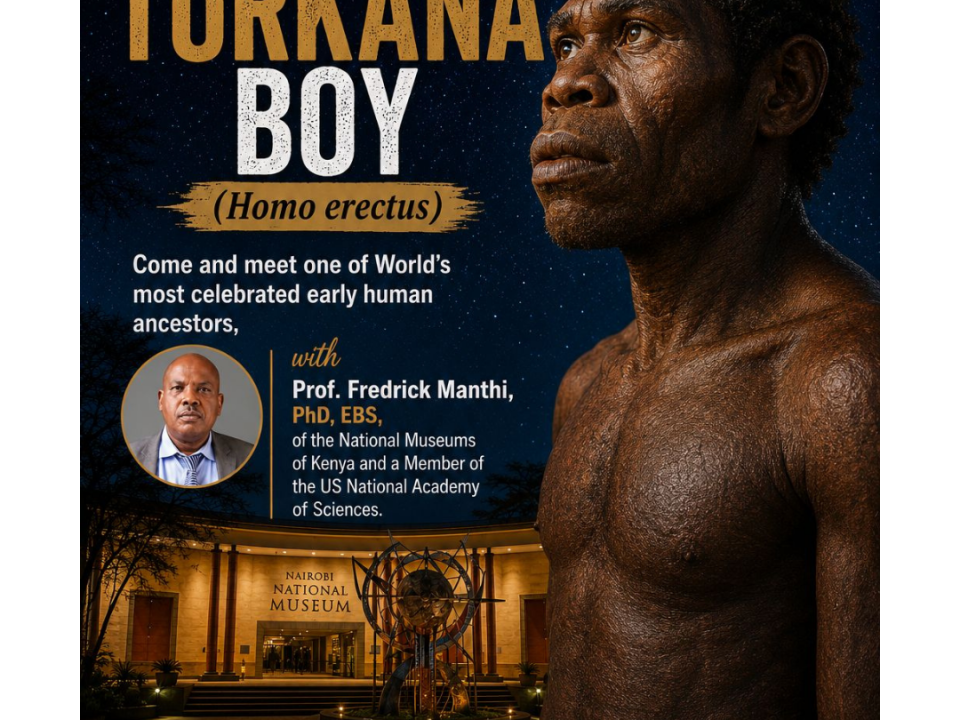
The tour moved to the vault, known as the “strong room.” Here, the dignitaries stood in awe of its design—a fortress capable of withstanding even the most destructive forces, including a bomb. This is where Turkana Boy, the pride of Kenya’s paleontological history, resides.

As I assisted Mr. Malaki with the exhibition showcasing Kenya’s eight UNESCO World Heritage Sites, I couldn’t help but feel a wave of pride. It was a privilege to play even a small role in this monumental day.

Then came the moment that seemed plucked out of a dream. I found myself standing face-to-face with His Excellency, President William Samoei Ruto. When he extended his hand, I shook it—a gesture that seemed simple yet carried the weight of a once-in-a-lifetime experience. Those fleeting minutes in the President’s orbit felt unreal, as if time had paused to allow me to savor the moment.

From the exhibitions, the guests were guided to the main tent, where they were welcomed with vibrant traditional dances. The lively performances set a celebratory tone as dignitaries took their seats for the official speeches.

The event featured a lineup of esteemed speakers, each adding depth and significance to the day. Leaders from various sectors took the stage, including MPs, the Director General of the National Museums of Kenya Prof. Mary Gikungu, and the PS Ms. Ummi Bashir, Representatives from UNESCO and the British High Commission also delivered thoughtful addresses, underscoring the importance of heritage conservation and international collaboration.

Kilifi County Governor Gideon Mung’aro expressed hope that Gedi’s UNESCO recognition would boost tourism and bring economic growth to the region.

The British High Commissioner, Neil Wigan, emphasized the enduring friendship and historical ties between Kenya and the United Kingdom. In a remarkable gesture of goodwill, he formally handed over a treasure trove of archival materials: 2,658 files and over 300,000 images from 1907 to 1968. These invaluable resources, which include intelligence reports, political summaries, and historical accounts, represent a commitment to preserving and sharing Kenya’s rich history.

To support Kenya’s efforts in digitizing these materials and ensuring accessibility for future generations, the British government also donated servers, laptops, and scanners. This act of generosity underscored the UK’s dedication to fostering collaboration and empowering Kenya to safeguard its heritage through modern technology. With these tools, Kenya will be able to properly and deeply understand its history and make it accessible to both local and international audiences.

President William Samoei Ruto’s speech carried both gravity and humor. Speaking with the insight of a scientist and the vision of a leader, he highlighted the underrepresentation of African sites on the UNESCO World Heritage list and questioned the fairness of the process, noting that Africa, with its 1.4 billion people and 54 countries, accounts for only 10% of the world’s UNESCO sites.

In a lighthearted moment, the President joked about how he might have been working at the museum had his path not led to politics. He shared memories of his university days with NMK Director General Dr. Mary Gikungu and pledged to improve the welfare of museum scientists. His promise of KES 1 billion to expand NMK facilities, including a new building at the Nairobi National Museum and upgrades at Uhuru Gardens, was met with applause.

The day ended with two symbolic acts: the cutting of the Turkana Boy anniversary cake and the presentation of a UNESCO certificate recognizing Gedi as a World Heritage Site. These moments perfectly encapsulated the spirit of the event—a celebration of Kenya’s past, a nod to its present, and a bold step toward its future.

As the first sitting President to visit the museum, President Ruto promised to return, stating that the experience was deeply personal. The event was not just a celebration of Gedi’s inscription but also a reaffirmation of Kenya’s commitment to its heritage, science, and future.


Author: Lilian Mwenda

It’s not every day that you get to be part of something timeless, standing at the edge of history and peering into the depths of our shared past. When I traveled to Malindi for the media launch of the Ngomeni Shipwreck Project, my heart buzzed with excitement and curiosity. I had read about the legendary Portuguese vessel lying beneath the surface of Kenyan waters—a 16th-century shipwreck that had kept its secrets for centuries. Now, it was being uncovered by the dedicated team at the National Museums of Kenya.

Arriving at the Malindi Museum, I was struck by its unique charm. Soon, it will host the remarkable artifacts from the Ngomeni shipwreck, transforming into a center where visitors can connect with a centuries-old maritime legacy.

The media launch itself was an event to remember. The atmosphere was a perfect mix of reverence and excitement. When Dr. Caesar Bita, the lead maritime archaeologist, took to the podium, his passion and commitment captivated everyone present. He painted a vivid picture of the ship’s past—a Portuguese nau that had navigated the Vasco da Gama trade route. Laden with ivory, copper, and cinnabar, it represented the bustling commerce of a bygone era. But somewhere along its journey, it had succumbed to the ocean’s might, coming to rest just 500 meters from Ngomeni’s shore, at a depth of 6 meters.

Listening to Dr. Bita, I realised this shipwreck wasn’t just a collection of artifacts; it was a time capsule. It held stories of explorers, traders, and sailors whose lives were deeply intertwined with the Indian Ocean’s history. I could feel his determination to bring those stories to light—not just for historians, but for all to learn.

This groundbreaking project is supported by the National Museums of Kenya at the highest levels. Prof. Mary Gikungu, the Director-General, Edwin Abonyo, Chair of the Board, and Dr. Terer, Directorate of National Repository and Research, were all present to witness and endorse the project, underscoring its importance as part of Kenya’s rich heritage.

Behind the grandeur of the discovery lay years of painstaking work. Dr. Bita and his team had surveyed the wreck, delicately excavated its remains, and worked tirelessly to preserve its artifacts. What struck me most was the purpose behind their efforts: this was more than archaeology. It was about preserving Kenya’s underwater cultural heritage and making it accessible to all.

One of the highlights of the event was hearing about the plans for the Ngomeni artifacts. Dr. Bita’s vision included a permanent exhibit at the Malindi Museum, where visitors will connect with this extraordinary chapter of history. There was more. He talked about training young maritime archaeologists, creating interpretation centers, and involving the local community in meaningful ways. In fact, the locals love him so much that they have named their team of divers and project workers #TeamCaesar.

And the community’s involvement is where this story becomes even more powerful. In Ngomeni, the project is creating tangible opportunities for the locals. Fifteen young men have already been trained as divers, while others have found work in various support roles. Discussions are also underway about establishing a museum, sponsoring schools, and even teaching local children new languages. This is not new territory for Dr. Bita—he is a firm believer in uplifting communities. At Mida Creek, for example, he worked with local women and youth to establish sustainable businesses like organic farming, mangrove reforestation, and eco-tourism.

I had the privilege of visiting Mida Creek with Dr. Bita, Professor Filipe Castro, a Portuguese underwater archaeologist, and Gary Philbrick, a 77-year-old diver who has been exploring underwater worlds for over 65 years. Not only is Gary an accomplished diver, but he is also one of the project’s key financiers, whose dedication to maritime history is awe-inspiring. The warmth with which the community welcomed us was unforgettable. They cooked for us, sang for us and shared stories, showcasing how maritime heritage can inspire growth and resilience.

Every individual I met on this journey added something remarkable to the story. Professor Castro’s decades of experience brought a global perspective, while Gary’s lifelong dedication to diving reminded me of the sheer wonder of underwater exploration. Then there was Susan Mtakani, a fearless diver from the Kenya Coast Guard whose work in body retrieval and rescue operations commands admiration.

This project is a true testament to teamwork, passion, and perseverance. Diving several times a day for hours at a time is not an easy task. It requires unwavering commitment, and seeing this dedication firsthand was inspiring.

As someone who has never been underwater, I came into this project as an observer. But by the end, I found myself considering taking up sonography or underwater photography—just to be a part of something as incredible as this.

Ngomeni is more than a shipwreck; it’s a story of discovery, community, and possibility. This project has reminded me how much there is to uncover—not just in the depths of the ocean, but in the connections we build and the legacies we leave behind.

By Lilly M

The National Museums of Kenya (NMK) is pleased to announce the successful completion of the Strategic Plan 2020-2023. This plan guided us in fulfilling our mission to promote, protect, and preserve Kenya’s rich cultural and natural heritage over the last three years.

We are also proud to introduce our new Strategic Plan 2023-2027, which sets the course for the next phase of NMK’s journey. This plan will continue to drive our commitment to safeguarding Kenya’s national heritage and identity, ensuring that future generations can connect with our country’s rich legacy.

https://museums.or.ke/download/2023-2027-nmk-strategic-plan/


X